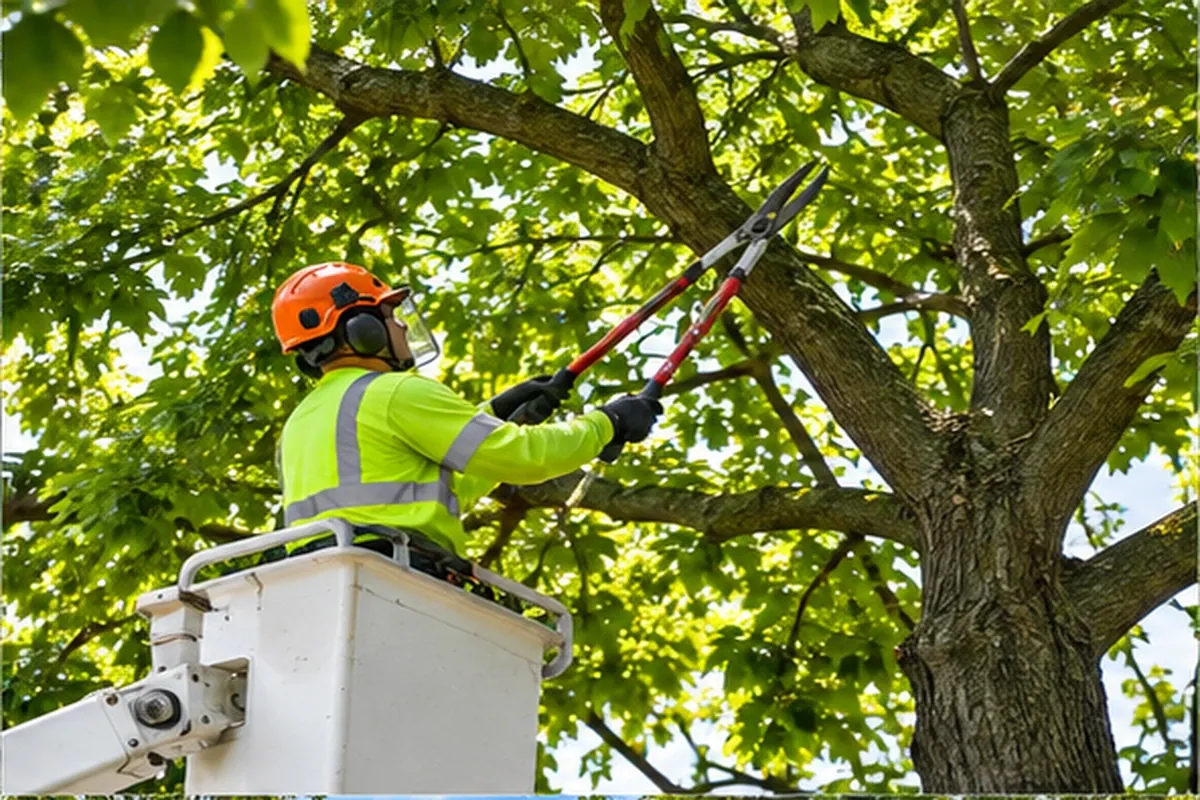
San Diego does not have a dormant season the way a cold-climate city does. Growth slows in the cool months but rarely stops, which changes both when to prune and what a cut does. The window here is late winter, before the spring push, and the exceptions are as important as the rule.
Pruning removes live tissue, and a tree responds by pushing new growth. In a cold climate the response waits for spring because the tree is dormant. Here the response can start within weeks, so a cut made in October grows back through a dry winter and into the fire season with soft, water-rich shoots that are the least fire-resistant material on the property.
Late winter, roughly January into early March, gives the tree a full growing season to seal a wound before the dry months, and it removes material before the Santa Ana season rather than after it. Structure work, deadwood removal and clearance pruning all sit in that window.
Eucalyptus is not pruned the way a shade tree is pruned. It carries deadwood inside a live crown for years, and the useful job is deadwood removal plus selective thinning at the ends, not a hard reduction. A hard cut into old eucalyptus wood often produces a burst of epicormic shoots along the limb, which is the opposite of the open crown that was wanted.
The other point is timing. Deadwood on a eucalyptus is a projectile in a Santa Ana wind, so the work belongs in the cool months before the wind season, done from a rope and harness with the pieces lowered rather than dropped.
A palm is a monocot, and pruning it is not pruning a tree. There is no branch structure to shape, and the only useful work is removing dead fronds, flower stalks and fruit, plus taking off a head that has died.
The temptation to strip a Canary Island date palm clean is worth resisting. The older green fronds are feeding the palm, and removing them all in one pass weakens the tree at exactly the moment the South American palm weevil is looking for a stressed host. Take the dead skirt and leave the green. If the crown has collapsed, the palm is dead and the job is a removal, not a trim.
Published 2026 ranges put routine pruning of a mature tree at roughly $200 to $800, with larger or hazard-adjacent work above that. Deadwood removal on a standing tree is published at $400 to $900 per tree. Palm trimming is usually priced per palm rather than per hour, and climbs above the standard band when the palm is tall or the head is heavy.
The variable is access and height, not species. A tree behind a gate with a narrow side yard costs more than the same tree on a driveway.
If the property sits in a fire hazard severity zone, pruning overlaps with defensible space. State rules describe three zones: the first five feet around the structure, where the aim is no combustible material against the wall; five to thirty feet, where plants are kept low, spaced and irrigated; and thirty to one hundred feet, where dead material is reduced and trees are spaced. Limb up mature trees to roughly ten feet above the ground in the outer zones, and keep branches clear of the roof.
That work is priced as its own job, because it is measured in volume of material removed rather than in trees pruned.
Late winter, roughly January into early March, before the spring growth push. That gives the cut a full season to seal before the dry months and removes material before the Santa Ana wind season rather than after it.
Take the dead fronds and the flower and fruit stalks, and leave the green ones. Stripping a Canary Island date palm to the crownshaft weakens it at the exact moment the palm weevil is looking for a stressed host.
Small deadwood low in the crown, yes. Anything structural, anything near a wound from a previous cut, or anything on an oak that is already showing dieback should be assessed before it is cut, because in this county an oak wound is an opening for borers.